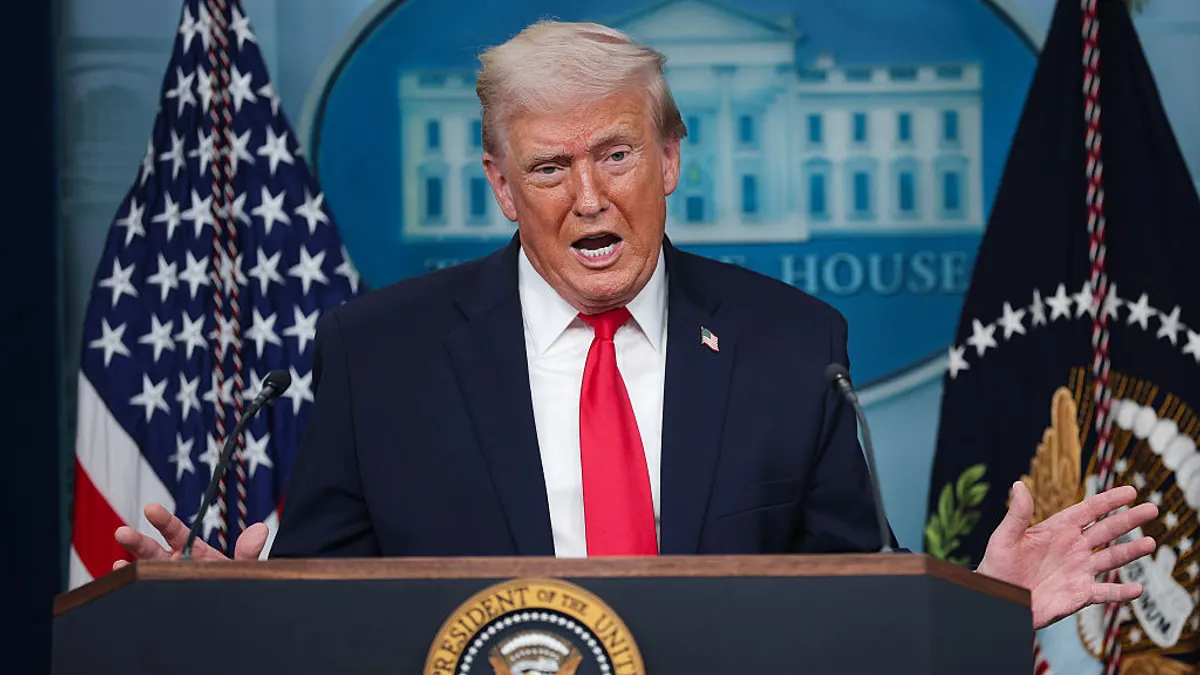
Ottawa / Washington — U.S. President Donald Trump has threatened to impose a 100 % tariff on all Canadian imports if Canada proceeds with a trade agreement involving China — marking a sharp escalation in trade tensions between the two longtime economic partners. Trump’s comments were made in a social media post on Saturday and have sparked concern in Ottawa and markets across North America about the future of bilateral trade.
Trump said that if Canadian Prime Minister Mark Carney allows Canada to become a “drop off port” for Chinese goods to enter the U.S. market, the United States would immediately hit Canadian goods with a full tariff at the border, a move that could dramatically affect cross-border commerce.
What Trump Is Responding To
The tariff threat comes amid recent developments in Canada’s trade relationship with China, including an agreement reached during Prime Minister Carney’s visit to Beijing that lowers some tariffs on Chinese-made electric vehicles in exchange for reduced Chinese duties on Canadian agricultural products such as canola, lobster and peas. Ottawa has stressed that no free-trade agreement with China is being pursued, but Trump’s warning underscored how sensitive U.S. leaders are to shifts in trade patterns affecting global competition with China.
In his social message, Trump revived an old insult for Carney by calling him “governor,” a reference to a nickname used in past public clashes between U.S. leaders and Canadian counterparts. The tone of the message also included dramatic language about China’s potential economic influence.
Diplomatic and Economic Fallout
Canada and the United States are each other’s largest trading partners, with billions of dollars in goods and services crossing the border daily. A 100 % tariff could have significant consequences for industries such as automotive parts, agriculture and natural resources, potentially raising prices for consumers and disrupting supply chains.
International trade experts have also warned that such a tariff would not only hurt Canadian businesses but could backfire on U.S. consumers and companies that rely on Canadian imports, possibly slowing economic growth on both sides of the border.
In Ottawa, federal officials pushed back against the threat. Dominic LeBlanc, Canada’s minister responsible for Canada-U.S. trade, stressed the longstanding and mutually beneficial economic relationship between the two countries and reaffirmed that Canada is not pursuing a comprehensive free-trade agreement with China.
Why This Matters to the North
For northern regions like the Northwest Territories and Yukon, Canada-U.S. trade is deeply tied to local economies — from mining and energy exports to manufactured goods and critical supplies. A major tariff could increase costs for businesses and consumers alike and pose new challenges for industries reliant on U.S. markets. Northern exporters could face barriers to growth, and import prices on key supplies could rise, affecting costs of living and operations in remote communities.
Even the threat of a tariff can slow investment and shift trade strategies for companies that depend on predictable cross-border rules.
What Happens Next
It’s still unclear whether Trump’s tariff threat will become actual policy. Canadian officials say they will focus on diplomatic engagement and maintain the strength of Canada-U.S. relations, which include shared trade under the USMCA agreement. Markets will be watching for any formal action or negotiations that follow this latest escalation, while Ottawa insists there is no current plan for a full free-trade agreement with China.