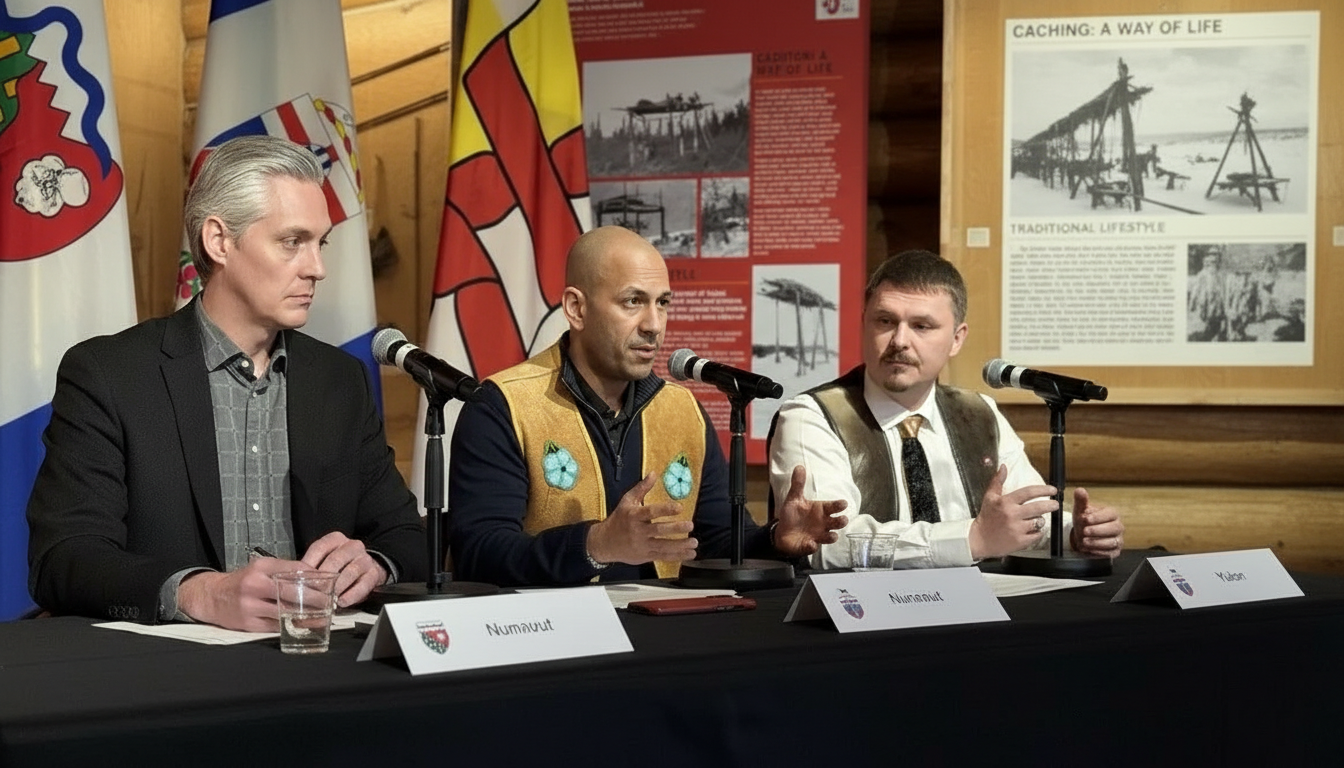
Ottawa / Northern Canada — As Canada’s premiers prepared for a meeting this week with Prime Minister Mark Carney, the leaders of the three territorial governments emphasized infrastructure, sovereignty and cost‑of‑living challenges as key priorities they want federal attention on. The meeting comes amid broader discussions on economic strategy, Canada‑U.S. trade tensions and Arctic security.
Territorial premiers — R.J. Simpson of the Northwest Territories, John Main of Nunavut and Currie Dixon of the Yukon — each outlined issues unique to their regions as they headed into talks with Carney in Ottawa.
Focus on Infrastructure & Sovereignty
Premier Simpson said much of the North’s existing infrastructure dates back decades and has not been significantly upgraded, stressing that investment in roads, power grids and community facilities is critical. On northern sovereignty, he noted that visible community infrastructure — not just military presence — demonstrates Canada’s commitment to the North.
“Up here, we have infrastructure that was built in the ’50s, ’60s, and ’70s, and not a lot since then,” Simpson told CBC News. “When you look at a map and you see highways and communities, that’s sovereignty.”
Nunavut Premier Calls for Broad Community Investment
Nunavut Premier Main said infrastructure upgrades are needed everywhere, in every community — from transportation networks to energy systems. Main also flagged the high cost of living as an ongoing concern for his territory, particularly in light of possible U.S. tariff impacts on goods and services.
Main noted existing cultural and familial ties to Greenland, which have been highlighted amid international interest in the neighbouring island, and said Nunavut stands in solidarity with Greenland communities amid geopolitical conversations.
Yukon Premier Highlights Power and Cross‑Border Partnerships
Yukon Premier Dixon said his territory’s priorities include strengthening energy infrastructure, especially after a recent cold snap raised concerns about the reliability of the grid. He also pointed to Yukon’s connection with neighbouring Alaska, saying the relationship with the U.S. state could play a positive role for both jurisdictions.
“There will continue to be a relationship between Yukon and Alaska,” Dixon said, noting events such as the upcoming Arctic Winter Games as examples of ongoing cross‑border ties.
Broader Context for the Meeting
Carney’s meetings with premiers are part of ongoing federal‑territorial collaboration on national priorities including economic resilience and international trade tensions. Over the past year, meetings have also touched on Canada‑U.S. trade issues and the importance of Arctic security — themes that intersect with northern premiers’ priorities.
In previous sessions with premiers, Carney and provincial and territorial leaders discussed economic support measures, including employment insurance changes, business financing facilities and infrastructure initiatives designed to strengthen national competitiveness and cooperation.
What This Means for Northern Communities
The premiers’ focus on infrastructure, energy reliability and cost‑of‑living issues reflects long‑standing northern concerns. For regions with sparse roads, high transportation costs and aging utilities, federal support could shape community growth, economic opportunity and daily life.
The meeting with the prime minister later this week is expected to advance negotiations on long‑term infrastructure funding and policies that reflect northern priorities within broader Canadian strategic planning.
Attribution
This article is based on reporting by CBC News and additional public sources. It has been rewritten and edited by YellowNorth to provide clarity and northern context.